
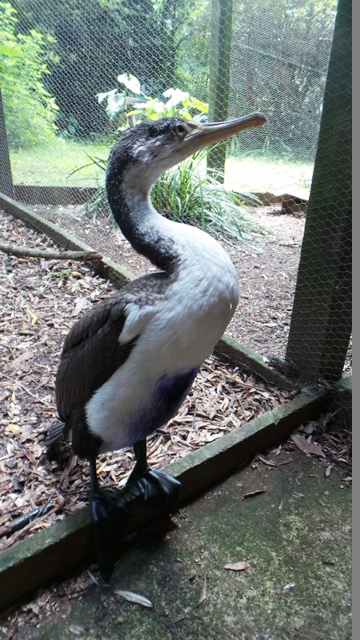
Ever since I was a child growing up in Africa, I had always dreamed of running a wildlife rehabilitation centre. Since I had settled in Tauranga, I decided that it was time for me to fulfil this dream even though I wasn’t in Africa and the wildlife was very different! Unlike Africa’s Big Five large mammals, New Zealand’s only indigenous land based mammal is a bat, the only others are dolphins and whales in the sea, the most vicious predator is the eel and the vast majority of wildlife that I would be able to offer help to would be our feathered friends.
I met with our local Department of Conservation to find out how I may be of help and found that it would be beneficial to our community if I provided veterinary care for injured and orphaned wildlife and rallied a team of volunteers to take care of the rearing and rehabilitation process. It was easy to assemble a team of enthusiastic volunteers and so our journey began…
Our first patient was a Pukeko that been hit by a car. He had a dislocated hip, which we did surgery on and sent him home with one of our volunteers, Frith. Pukekos can be very aggressive and they have very strong beaks which can inflict some nasty wounds. This pukeko was a real punk – we had to watch our fingers as we handled him and he was very quick to bite and earned the name “Edward Scissorbeak”! Initially he required force feeding but it wasn’t long before he began to eat on his own and went on to make a good recovery, later being released again much to his delight!
Our next couple of patients were “Quackers” a little duckling, small enough to sit in your hand and a beautiful harrier hawk that was found collapsed after having a seizure. We treated the hawk and it pulled through and was eventually released, a majestic sight to see! Quacker’s wounds that were inflicted by a cat, healed well and he waddled around his aviary floor munching on tasty morsels.
Ducklings are social creatures and it is important to ideally have them in the company of their own kind. They go through a process of imprinting, which means that they think they are whatever it is that they see most commonly and if this is the human rearing them, it doesn’t bode well for a future back in the wild. With this in mind and there being none of his own kind to keep him company at that stage, he was introduced to a few quails. He loved to follow his big friends around but it wasn’t long before he outgrew them and at that stage we had some other ducklings to keep him company.
Animals interact in such amazing ways; it never ceases to amaze me and is something that I can watch for hours. One our volunteers had a pet chicken that would act as a wonderful surrogate mother for orphaned ducklings. She would lead them all around the garden to find food and at night time huddle up with them in her nest. The ducklings grew steadily and one day on their walk around the garden, the duckling’s instinct kicked in and they made a bee-line for the pond and all jumped in to float about and enjoy the water. This was much to the fright and panic of their chicken surrogate mother whose instinct as a chicken dictated that this action could be fatal to chicks of her own kind!
Another bird brought in for care by the Department of Conservation was a Kingfisher. He had an injured wing and a warning label on his box with his newly acquired name “Mr Grumpy” – most appropriate given his knack of biting at people’s fingers with his sharp beak through the breathing holes in his box! He went on to make an excellent recovery and was hopefully a whole lot less grumpy flying free with a fixed wing.
Our volunteers were a dedicated team and each had stories to tell. Jody told how one day she had nursed a seagull that had flown into a window and had been stunned. In this situation, if the bird has no major injuries, leaving it in a dark box for a few hours or overnight often gives it enough of a gap to recuperate and it can then be released.
The following morning, after Jody had settled the seagull into a dark box, Jody gently opened the box expecting that it had made a good recovery. Very quietly and carefully she reached into the box and lovingly picked the bird up and then threw it up into the air to give it a head start flying. She was devastated when the bird reached maximum height and then plummeted back down to earth…….. it was no longer alive!
Unfortunately working with wildlife can be quite unforgiving as there are many fatalities that occur despite our best efforts. Having a sense of humour to help deal with these situations can be a helpful thing as can keeping the bigger picture in mind. One day, on my way back from Auckland, as I was travelling down the motorway, I was devastated as a sparrow flew into the front of my car which was sure to kill it. I felt terrible but rationalised that these things happen and there was no way that I could have avoided it.
A little later I stopped in Paeroa, a little town on my way to Tauranga, to buy some fruit and noticed the little sparrow dead and wedged under my bonnet. The least I could do was to take the little guy home and to give him a dignified burial. I had just eaten a pie and used my empty pie packet to place the little sparrow in and I continued my journey. On my way home I stopped in at one of our volunteers to check on our inmates, most of them were doing well, in particular the little morepork (little owl) that had been brought in a few days before with a head injury from being hit by a car. It occurred to me then that the sparrow could also be used to feed our morepork too and at least wasn’t a waste. The morepork seemed to concur and wasted no time “recycling” the dead sparrow!
Moreporks are gorgeous birds and I always feel so humbled working with them. Their big and beautiful owl eyes are captivating and they amuse me no end when they make their little “cluck cluck” noise when they feel threatened. This happens occasionally when we need to handle them. We had a morepork brought in that had been caught on a barbed wire fence and had been hanging there for days. He was unable to stand or even to lift his head up; it would just hang. Nicola, made him a special neck brace and a tripod-like contraption to help support him and it kept him upright and stopped him from falling over. She devotedly force fed him with a syringe and we dosed him with some homeopathic medication and neutraceuticals to support his recovery since conventional medicine had little to offer and this little guy was in a bad way.
Day by day he grew stronger and eventually managed to stand on his own, no longer needing his specially designed tripod but unfortunately his head would still hang. After a few more days of Nicola’s incredible tender loving care this too changed and he moved on to being housed in an aviary where he would perch, proudly holding his head up for longer and longer periods of time. He would savour ploughing into the mice that he was fed, which was excellent exercise for his neck and after a couple of weeks in the aviary he was released back into the bush.
We had so many wonderful people helping us with wildlife care, including a pest control company which provided us with rodents that they had trapped to feed to our birds of prey. We also had help from unexpected places like our volunteer Eileen’s cat, “Mrs Boo”, who would bring in whole mice that she had caught and would take them to Eileen as if she knew that we needed them!
In New Zealand domestic cats can be a threat to our native birds, especially if they aren’t responsibly looked after and are not desexed, left to breed and roam. “Mrs Boo” is an example to all cats as she would catch only pest species like mice and donate them to our cause, helping to preserve our wildlife! There was also Elmo, a cat belonging to one of my clients who is also a great example of a “native bird friendly cat” as he would only stalk fluff balls and dead leaves, although his owner believed that one day he would maybe become brave enough to stalk live leaves!
Nicola was always keen to do whatever she could and would go the extra mile for wildlife in her care. We were brought in a baby heron which we found had rickets, a disease where the bones grow crookedly. In dogs and cats this is often due to nutritional deficiencies so we went about designing a well balanced diet for the little fella and we also designed some special jandals (flip flops) to help splint his toes and legs to encourage them to grow straight. Nicola named him Sione, a popular name of islanders in nearby Samoa!
Sadly, Sione’s condition never improved and we ended up having to humanely euthanize him as the kindest option. With young birds, they are often thrown out of their nest by their parents when their parents detect a health issue. This is an important action on their part since investing so much time and energy foraging for and feeding a chick that will not survive in the wild is not good “biological economy”. We humans mean well by trying to help these delightful young birds but we often find that nature knows best and many of these chicks were never meant to live in the first place.
During summer, we have an influx of seabirds called shearwaters and petrels. They are amazing flyers, flying long distances and are also excellent at diving. During windy weather they can be blown off course and are often found in people’s backyards, unable to take off again as they need a strong breeze to help lift them into flight. My first encounter was with a shearwater brought in to me one late afternoon as it had been found in someone’s garden. I examined it and found no injuries, just mild dehydration and exhaustion.
I fed him with some high energy food to get his energy levels up so that he would recover quickly and be ready for release as soon as possible, since some of these birds find captivity very stressful. That night I put him inside a box in the lounge of our little house. During the night, we awoke to his “tromp tromp tromp” walking around the box, clearly feeling a lot better. These birds are nocturnal and he tirelessly continued to “tromp” around the box making quite a racket. Our little house didn’t really have any other place to keep him so in order to get some sleep, I put him in the car in the garage and we slept soundly after that.
I awoke the next morning to find the little beggar had managed to manoeuvre out of his box and was perched on the car seat triumphantly after having pooped on it too! That evening I took him to the beach and thoroughly enjoyed the moment that all wildlife rehabbers savour when he would be released. He waddled out of the box, took a moment to find his bearings, spread his wings and was lifted into a smooth and elegant flight over the sea and flew off into the sunset.
I was called out to see a duck that had decided to make her home in the garden of some lovely people who noticed that she had a sore leg. When tempted with a bit of food, a sweet little duck hobbled out from her bush. I found that she had some muscle damage and left some medication for her new carers to give her. The following week I made a visit to see that her leg was healing and I was honoured and knew that I was starting to move up in the world, the kindly couple announced that they had named her after me!
Word was getting around in our community about our wildlife rehabilitation service and since the service was in demand, we decided that forming a charitable trust would be a beneficial thing to do. We were lucky to find a wonderful solicitor who made this happen at very little cost to us and we called the trust “The New Zealand Native Bird and Animal Rescue and Rehabilitation Trust”, a real mouthful but described our intent to help birds and animals not just locally but across the country as well. Later, as part of my steep learning curve understanding business, it became clear that this name wasn’t user friendly for branding and marketing and so with the help of some people who understood these things, we named our wildlife trust ARRC, an acronym for “Animal Rescue and Rehabilitation Centre”.
To read more about my adventures, read Vet Tales available as a book or e-book from https://www.drliza.co.nz/shop/